A note on sourcing: All inflation figures in this article come from official government sources (BLS, BEA) or major economic research firms (Morningstar, CBO). Consumer behavior statistics are drawn from Ibotta's 2026 State of Spend report (5,000+ US shoppers), NIQ/NielsenIQ, and DontPayFull research. Where figures are projections rather than confirmed data, that is noted. PureCouponCodes.com did not conduct original primary surveys for this report.
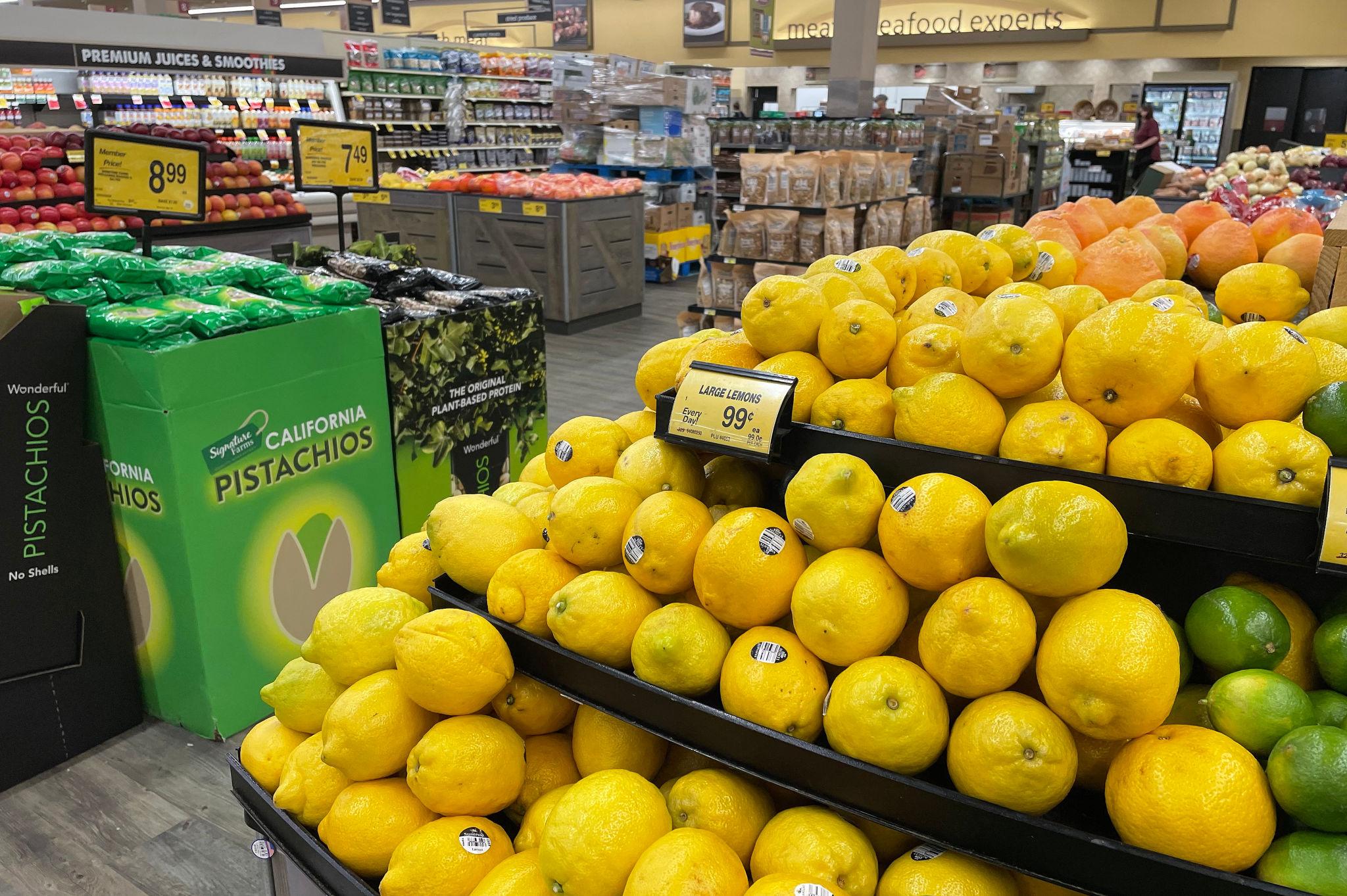
US grocery prices are roughly 32% above their 2020 levels. That number has not moved meaningfully down, even as the Federal Reserve's headline inflation measures have moderated to near their 2% target. The math is straightforward but deeply unpleasant: a $200 weekly grocery run in 2020 costs around $265 today, and that gap is not closing.
61% of US shoppers now explicitly use coupons to fight rising prices — not as a hobby or a pastime, but as a deliberate financial response to sustained purchasing power erosion. This article unpacks why that number is likely to grow in 2026, which categories face the most price pressure, and the strategies that consistently deliver the highest savings-per-minute-of-effort for households trying to stretch a budget without changing their lifestyle.
Where Inflation Actually Stands in Early 2026
Understanding the current inflation environment matters before discussing strategies, because different measures tell meaningfully different stories.
The headline CPI numbers:
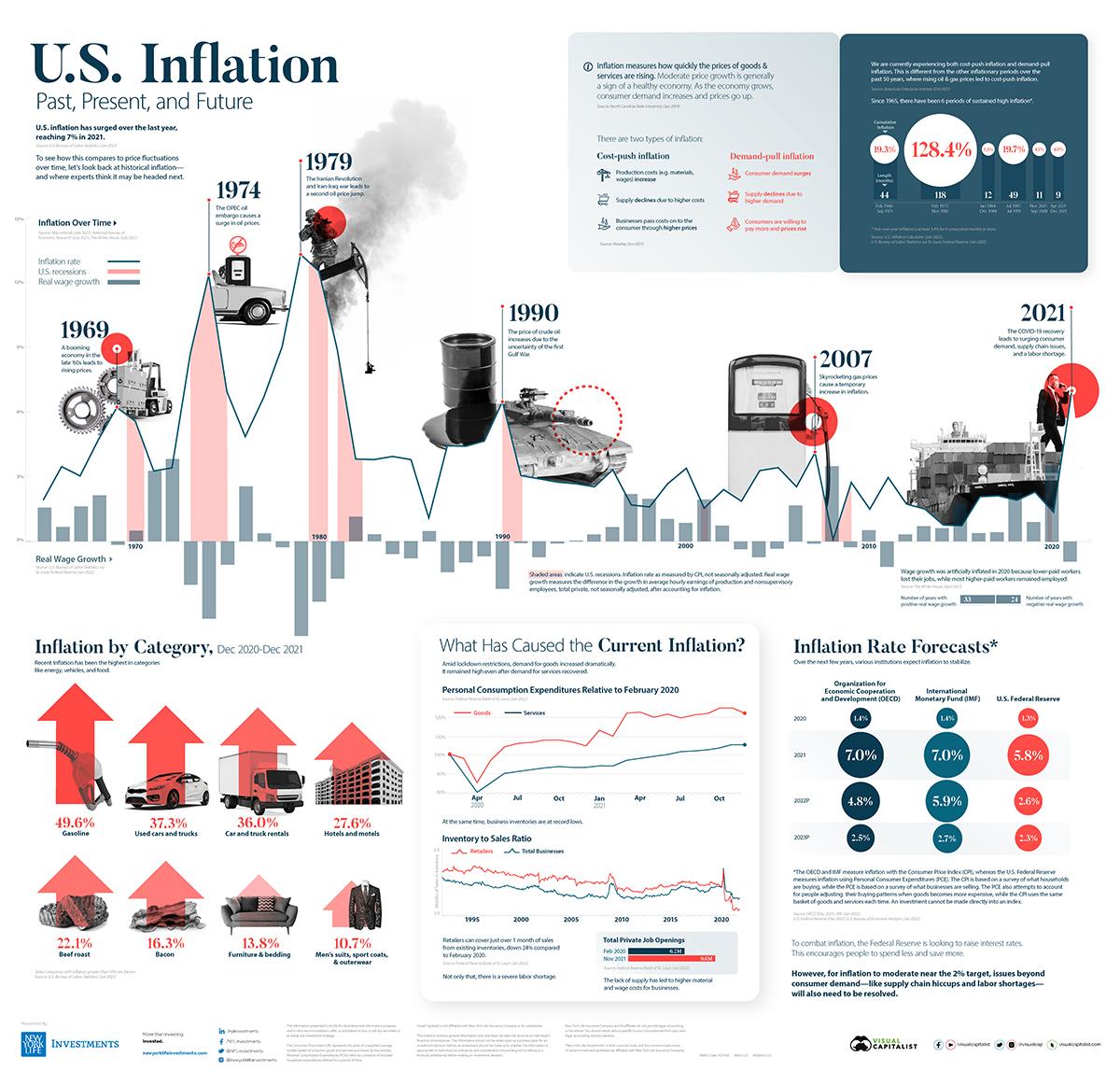
The Consumer Price Index rose 2.4% year-over-year as of February 2026, according to the Bureau of Labor Statistics — unchanged from January and at its lowest level since May 2025. Core CPI (excluding food and energy) stood at 2.5% year-over-year, also its lowest reading since early 2021.
These numbers sound reassuring. The Federal Reserve's preferred measure — Core PCE (Personal Consumption Expenditures) — came in at 3.0% year-over-year in February 2026, up from 2.8% the prior month, still meaningfully above the Fed's 2% target.
What the headline numbers miss:
Headline CPI cooling to 2.4% does not mean prices have fallen. It means they are rising more slowly than before. The cumulative effect of 2021–2024 inflation is permanently baked into current prices. A 2.4% increase on top of a 32% cumulative increase since 2020 still means prices are getting more expensive — just less quickly.
Food specifically continues to run hot. Food-at-home inflation held at 3.1% year-over-year in February 2026. Beef and veal prices are forecast to rise 9.4% in 2026, according to USDA Economic Research Service projections. Eggs remain volatile. Fresh vegetable prices are projected up 2%.
The tariff wildcard — why mid-2026 may be worse than early 2026:
The most significant near-term inflation risk is not traditional demand-pull inflation. It is tariff pass-through — and its timing is critical to understand.
According to industry analysts at Spins and food supply chain researchers, tariff-driven cost increases typically take 12–18 months to fully reach retail shelves. The "Liberation Day" tariffs that took effect in April 2025 are scheduled, by that timeline, to hit consumers fully between April and October 2026.
Major retailers and CPG brands absorbed roughly 80% of tariff costs in 2025 through margin compression — a deliberate strategy to protect price-sensitive consumers during an election cycle. That cushion is now exhausted. CPG brands including Hershey's (raising prices at least 10% in 2026), Campbell's (citing tariffs as 4% of 2026 cost of goods), Columbia Sportswear (raising spring/fall merchandise by "high single-digit percent"), and Levi Strauss have all indicated or implemented price increases for 2026.
Morningstar projects non-durable goods — food, apparel, paper products, and cleaning supplies — will rise 5.6% in 2026. For a household spending $800 per month on groceries, Morningstar's projection translates to approximately $45 more per month, or $540 additional annually, from tariff pass-through alone — on top of baseline food inflation.
The Congressional Budget Office estimated that tariffs will increase the PCE price index level by 0.9% cumulatively by end of 2026 relative to its pre-tariff baseline.
The practical implication: Shoppers who feel the inflation pinch has eased in early 2026 should be aware that the grocery pricing environment is likely to worsen in the second half of the year as tariff costs complete their pass-through to shelves.
How American Consumers Are Responding: The Behavioral Data
The inflation experience of 2021–2024 did not just cause short-term belt-tightening. It permanently changed how a significant segment of American shoppers approach everyday purchases — and those changed behaviors are proving sticky.
The "defensive playbook" that replaced panic:
Ibotta's 2026 State of Spend report, based on more than 5,000 US grocery shoppers surveyed in early 2026, documents a shift from inflation-reactive behavior to inflation-normalized behavior. The share of consumers who say inflation negatively affects them fell to 67%, down 3 percentage points year-over-year — not because prices are easier, but because shoppers have built adaptive habits that reduce the emotional impact.
The research shows consumers have cemented "defensive" strategies such as store switching and deal-seeking, signaling a strong preference for flexibility and price-first decision-making.
Key behavioral shifts documented in the report:
62% of shoppers now prioritize price over brand name — up from a majority already in 2024, but the direction is clear
44% are buying more store brands than they did a year ago
88% plan to maintain or increase private-label purchases in 2026
The share of consumers who believe name brands offer better quality dropped to 38% from 44% last year
Pre-trip list-making fell from 75% in 2023 to 68% in 2026, replaced by flexible, opportunistic in-store deal-hunting
The store brand shift — more durable than previous cycles:
Private label adoption during inflation is not new. What is different in this cycle is that the quality perception gap has narrowed substantially. US sales of store-brand products rose nearly 4% last year to a record $271 billion, according to the Private Label Manufacturers Association.
Crucially, the growth is not reversing as inflation cools. Previous cycles saw consumers return to name brands when economic pressure eased. This time, that reversal is not happening at scale — because the quality improvement in private labels over the past decade means the trade-down no longer feels like one.
US private-label food and beverage products are priced 28% lower than name brand equivalents per unit volume, according to Circana. For commodity categories — paper goods, cleaning supplies, basic pantry staples — the quality difference is often negligible, and 72% of consumers in First Insight testing could not correctly identify which was the private label when shown products side by side.
Who is switching: Gen Z (44%) and younger millennials (39%) lead first-time store brand adoption, followed by older millennials (29%) and Gen X (27%). The brand allegiance that older generations developed is not being transmitted to younger cohorts. This is a structural shift, not a cyclical one.
The Couponing Response to Inflation: Category-by-Category Strategy
Not all couponing effort is equally rewarded. The categories with the highest coupon availability, deepest discount rates, and best match between shopper need and available offers differ meaningfully. Here is a category-by-category breakdown of where the best inflation-fighting couponing ROI exists in 2026.
Groceries — Highest Volume, Best Stacking Opportunity
Grocery is the category most directly affected by current inflation, and it is also where the most effective defensive tools exist. The average grocery shopper using digital coupons saved 15.8% off each purchase, per Capital One Shopping Research — a meaningful offset against food-at-home inflation running at 3.1%.
Strategies that compound:
Digital coupon clipping from your store app: Nearly every major US grocery chain (Kroger, Safeway, Publix, Albertsons, Target, Walmart) now has a digital coupon section in their app. Clipping 5–10 coupons before each trip takes under 3 minutes and applies automatically at checkout.
Matching store sales to manufacturer coupons: The most efficient grocery savings come from applying a coupon to an item that is also on sale that week. A 10% manufacturer coupon on an item that is already 20% off produces a 28% net discount from the regular price — significantly more than either alone. This is the "match-up" method and it requires checking the weekly circular before each trip.
Ibotta for item-specific cashback: Many grocery items have cashback offers on Ibotta that stack with both the sale price and digital coupon — creating a third layer of savings. Pre-activating Ibotta offers before shopping takes 2–3 minutes and produces meaningful savings on staple categories.
Private label as the baseline: Switching to store brands for commodity categories (cleaning supplies, paper goods, generic pantry staples) before applying coupons to the remaining name-brand purchases you genuinely prefer creates a hybrid strategy that captures savings where they are easiest while maintaining quality where it matters to you.
Packaged Goods — Act Before the Tariff Pass-Through Completes
For non-perishable pantry staples with long shelf lives — pasta, rice, canned goods, dried beans, coffee, cooking oils — the 12–18 month tariff pass-through timeline creates a specific opportunity: buying additional quantities now at pre-adjustment prices is economically rational for items you know you will consume.
This is not panic-buying. It is applying a basic purchasing principle: when you know a price increase is coming in a known timeframe, buying ahead at current prices at your normal consumption quantity is the equivalent of a guaranteed discount equal to the coming price increase.
Morningstar's projection of 5.6% non-durable goods price increases in 2026 means a $20 item bought today may cost $21.12 in October. For high-use staples, buying a 3-month supply now when coupon codes are available produces a stacked saving: the discount plus the price protection.
Electronics and Durables — Buy on the Right Cycle, Stack Aggressively
Morningstar projects durable goods prices to rise 4.5% cumulatively over 2025–2027, with the largest increases concentrated in import-dependent categories. Electronics, small appliances, and tools are particularly exposed because of high import content from China — the category most affected by tariff increases.
For electronics purchases that are planned but not urgent, the right buying window is now through June 2026, before the second-half tariff pass-through fully reaches shelves. The combination of:
Buying before second-half 2026 price increases
Prime Day 2026 (expected July 8–11) for maximum discount stacking
Historical late-Q2 promotional activity from major retailers
...creates a window where stacking a sale event discount with a cashback portal and a promo code from a verified aggregator like PureCouponCodes.com produces maximum total savings relative to what these same products will cost in Q4 2026.
Gas and Transportation — Targeted Tools
Gas prices are a component of the CPI energy index, which rebounded 0.5% month-over-month in February 2026 after previous declines. For regular commuters, two tools consistently produce meaningful per-gallon savings:
Upside app: Upside offers cashback on gas purchases at participating stations — the average saving per fill-up ranges from $0.05 to $0.25 per gallon, with some promotions reaching higher. It requires no planning — activate the offer in the app, fill up, claim cashback.
GasBuddy and AAA TripTik: Both apps surface the cheapest current gas prices near your location. For households filling up weekly, a consistent $0.10/gallon saving on 15 gallons adds up to $78/year with no coupon required — just 30 seconds per fill-up to check the nearest cheapest station.
Warehouse club gas: Costco and Sam's Club members consistently pay $0.10–$0.25 per gallon less than surrounding stations. For households already buying a warehouse club membership for grocery savings, the gas discount alone often justifies the membership cost.
Subscriptions — The Inflation Category Most Shoppers Ignore
Services inflation — subscriptions, streaming, software, gym memberships, insurance — is running at a higher rate than goods inflation in several categories and receives far less attention in standard coupon guides.
Streaming: Bundle deals consistently beat individual subscriptions by $8–$15/month. Switching to a bundled streaming package (Disney+/Hulu/ESPN+ bundle, or Apple One) versus three individual subscriptions can produce $100–$180 in annual savings with no reduction in content access.
Software: Annual billing vs. monthly billing typically saves 15–30% on the same product. The switch from monthly to annual takes 2 minutes and produces immediate savings.
Insurance: Annual rate shopping is the single highest-ROI savings activity available to most households — average savings for shoppers who compare auto insurance rates are $300–$700/year. A 30-minute comparison takes 5 minutes with an aggregator and does not require changing coverage levels.
The Savings Stack in an Inflationary Environment
The most effective anti-inflation shopping strategy is not any single tactic — it is using multiple tactics in sequence on the same purchase. Here is the complete stack for major spending categories:
For Grocery Purchases
Layer | Action | Typical Saving |
|---|---|---|
1. Store brand baseline | Switch commodity items to private label | 15–30% on those items |
2. Weekly sale match | Buy name-brand items only when on sale | 20–40% on those items |
3. Store app coupon | Clip digital coupons before each trip | Additional 5–15% |
4. Ibotta cashback | Activate item offers before shopping | $0.25–$2.00 per item |
5. Loyalty program | Kroger Plus, Target Circle, Safeway Club | Points toward future purchases |
A household applying all five layers to a $200 weekly grocery shop can realistically reduce the effective spend to $150–$165 — a 17–25% reduction that more than offsets current food inflation rates.
For Online Retail Purchases
Layer | Action | Typical Saving |
|---|---|---|
1. Price history check | CamelCamelCamel (Amazon) or Honey Droplist | Avoid fake "sale" prices |
2. Coupon/promo code | Search verified aggregator before checkout | 5–25% off base price |
3. Cashback portal | Rakuten or TopCashback (compare rates) | 1–15% back |
4. Credit card rewards | Amazon Visa (5%) or flat 2% cashback card | 2–5% back on purchase |
Knowing When NOT to Coupon
An important but frequently skipped point: the impulse purchase trap is real, and it is particularly active during inflationary periods when retailers lean more heavily on promotional pricing to maintain volume.
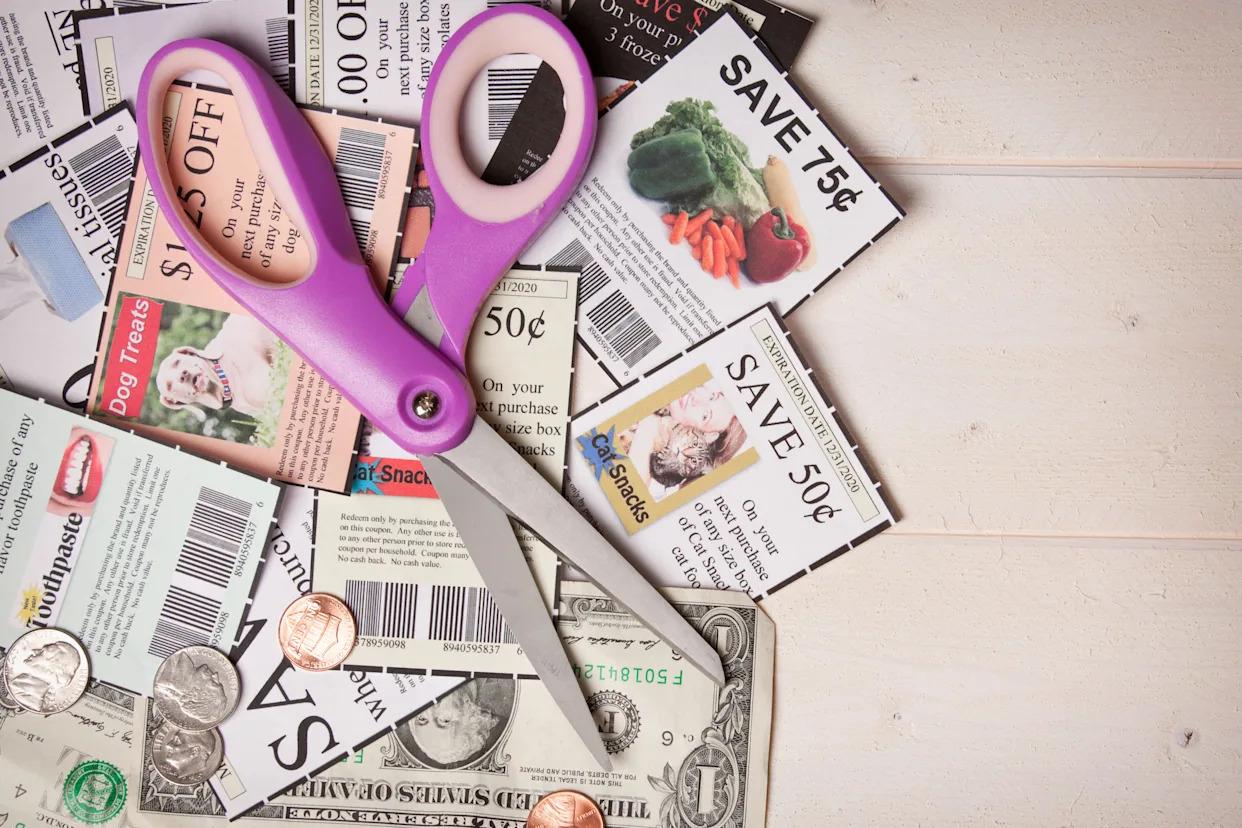
31% of American consumers buy more than they intended when they have a coupon. A 20% discount on an item you would not have bought otherwise is not a saving — it is an 80% expense you created. The most financially effective coupon users consistently report that they apply coupons to pre-planned purchases, not as triggers to buy.
The inflation-era version of this trap is stockpiling beyond reasonable consumption quantities. Buying 12 cans of soup because they are on sale is efficient household management. Buying 48 cans because there is a coupon is spending $40 you would not have spent, regardless of the unit price.
A Practical Monthly Budget Template With Coupon Tracking
The structure below captures the key spending categories, typical inflation rates for 2026, and the savings tools most effective for each.
Category | Est. Monthly Spend | 2026 Inflation Pressure | Best Saving Tool | Realistic Saving |
|---|---|---|---|---|
Groceries | $600–$900 | 3.1% YoY + tariff pass-through | Store brands + digital coupons + Ibotta | $80–$150/month |
Gas | $100–$200 | Volatile (energy index +0.5% MoM) | Upside app + cheapest local station | $10–$25/month |
Online retail | $200–$400 | 4.5–5.6% (durables/nondurables) | Promo code + cashback portal | $20–$80/month |
Subscriptions | $100–$200 | Services inflation varies | Bundle deals + annual billing | $15–$40/month |
Dining out | $200–$400 | Services inflation ~4% | Restaurant coupon apps, Upside | $15–$40/month |
Household supplies | $80–$150 | 5.6% (nondurables) | Store brands + store app coupons | $20–$40/month |
Total estimated | $1,280–$2,250 | $160–$375/month |
Annual savings range at the mid-point: approximately $2,600–$3,000 for a household applying this strategy across all categories consistently.
Frequently Asked Questions
Is inflation actually under control in 2026? Headline CPI is at 2.4% — near the Fed's 2% target. But this measure is backward-looking (year-over-year), and grocery prices are still 32% above 2020 levels. Core PCE, the Fed's preferred measure, remains at 3.0% — above target. And the tariff pass-through not yet fully reflected in prices is expected to push food and goods costs higher in mid-to-late 2026.
Which grocery items are most affected by tariffs in 2026? Categories most exposed to tariff-driven price increases: canned goods and packaged foods (steel/aluminum tariffs on packaging), imported produce and seafood, coffee, cocoa products (chocolate), European specialty foods, and beverages using imported ingredients. Domestic beef, chicken, and eggs are less tariff-affected but face their own supply pressures (avian flu, drought).
Is switching to store brands worth it? The data strongly supports it for commodity categories. US private-label products are 28% cheaper per unit than name brands on average, and independent blind testing shows consumers cannot distinguish the two for most basic categories. The savings are largest in: cleaning supplies, paper goods, canned goods, dairy basics, frozen vegetables, and over-the-counter medications.
How do I stack a coupon with a sale price? Does it always work? Most retailers allow manufacturer coupons to be applied on top of a sale price — this is the standard "match-up" approach. Store-issued coupons and manufacturer coupons can often be stacked simultaneously. Digital coupons clipped in a store app typically stack with sale prices. The exception: some promotional pricing explicitly excludes coupon use (check the terms on the sale tag).
Will stockpiling actually save money before tariff increases hit? For non-perishable staples you use regularly — pasta, rice, canned goods, coffee, cooking oil — yes, buying ahead of projected mid-2026 price increases is rational. The key qualifier is "items you will actually consume." Stockpiling perishables or speculative items negates the saving. A 3-month buffer on pantry staples bought with a current coupon essentially locks in today's price plus the discount.
Sources:
Bureau of Labor Statistics, CPI February 2026: bls.gov/cpi
BEA / Fox Business, PCE February 2026 (PCE +2.8% YoY, Core PCE +3.0%): foxbusiness.com
Trading Economics, US CPI data: tradingeconomics.com/united-states/inflation-cpi
Ibotta 2026 State of Spend report (5,000+ US shoppers): ipn.ibotta.com/resource-hub/state-of-spend-2026
Supermarket News / Ibotta: supermarketnews.com
Morningstar US Inflation Forecast 2026 (nondurables +5.6%, durables +4.5%): morningstar.com
Congressional Budget Office, Tariff Effects on PCE: cbo.gov
FMI / Dr. Ricky Volpe, Food Price Outlook 2026 (USDA grocery +1.7% midpoint): fmi.org
Food Navigator USA, Tariff pass-through timeline (12–18 months): foodnavigator-usa.com
DontPayFull, Inflation Impact on Shopping: dontpayfull.com/explore/inflation-impact-on-shopping
NIQ 2026 US Consumer Spending Analysis: nielseniq.com
Private Label Manufacturers Association, 2025 store brand sales ($271B): via NBC News / CNBC reporting
Circana, US private-label price gap (28% below name brand): via Food Navigator reporting
PureCouponCodes.com is mentioned once in this article as a verified coupon aggregator, consistent with the site's function. This article does not contain paid placements. Full Affiliate Disclosure →
Related Articles: